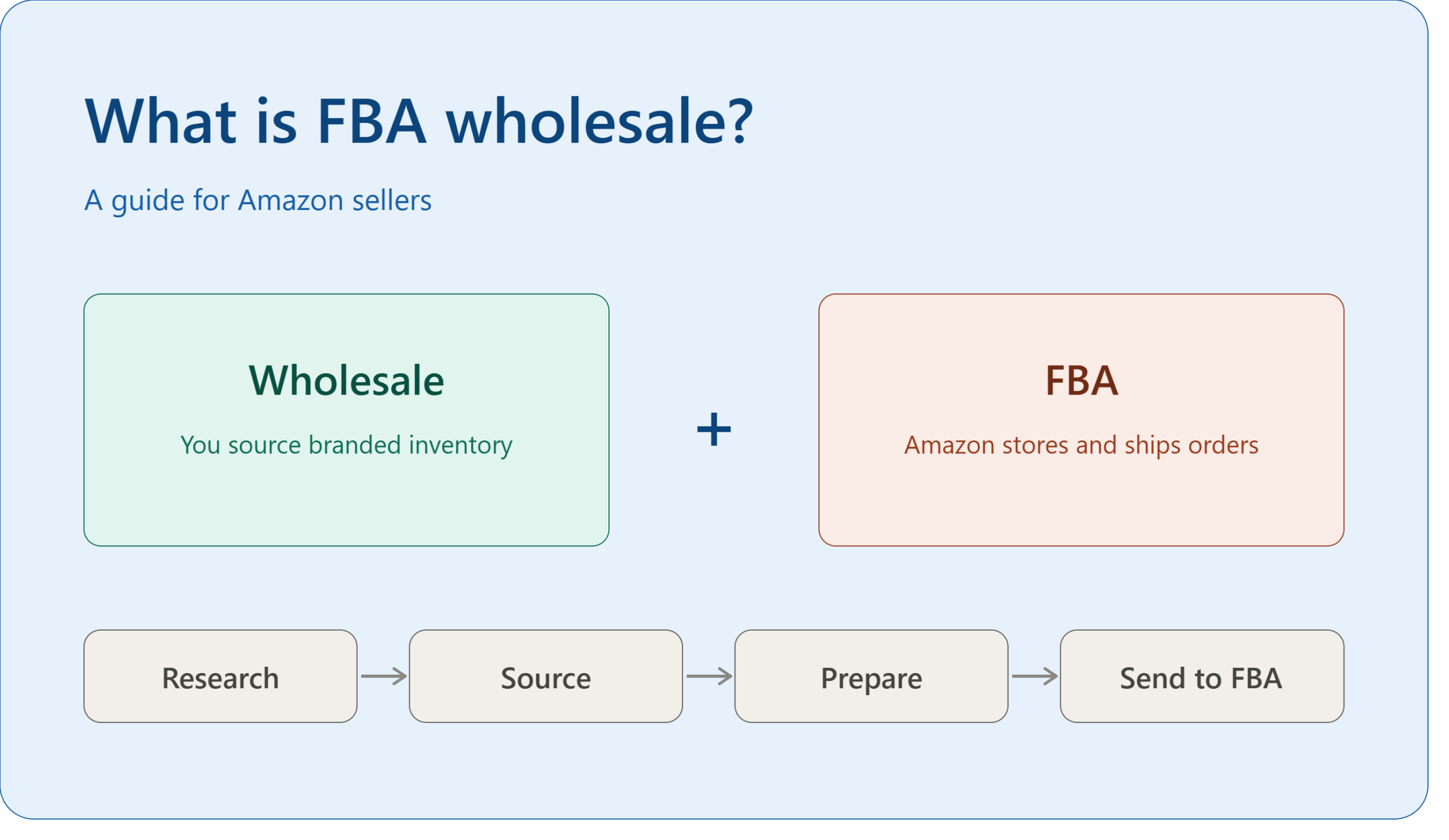
A product can already have a brand name, customer reviews, and an established listing on Amazon—and still present a business opportunity for another seller. That is the basic idea behind FBA wholesale: purchasing genuine, branded products in bulk from suitable suppliers and reselling them on Amazon while using Fulfillment by Amazon (FBA) to handle eligible customer orders.
The model combines two separate activities. Wholesale is how you source inventory; FBA is how Amazon stores and fulfills it after you send it to its fulfillment network. Understanding the difference is important because Amazon does not find or purchase the products for you. You remain responsible for sourcing, costs, listing eligibility, and inventory decisions.
Understanding the Wholesale Side of the Business
In a wholesale arrangement, you purchase products from a manufacturer, brand, or suitable distributor at business pricing. You then resell those products individually through Amazon, subject to the brand’s distribution terms and Amazon’s selling policies.
For example, imagine you purchase 100 units of an established household product from a wholesale distributor. Instead of creating a completely new product under your own brand, you may sell the genuine branded item through its existing Amazon listing, if you are eligible.
The main idea is to purchase inventory at a cost that leaves enough room for Amazon fees, shipping, preparation, and other expenses.
This model is different from private label selling, where a seller generally develops or sources a product to sell under their own brand. It also differs from retail arbitrage, where sellers purchase products from retail stores or websites and resell them individually.
Business model How inventory is sourced What the seller sells
FBA wholesale Bulk purchases from brands or wholesale suppliers Existing branded products
Private label Products manufactured or sourced for the seller’s brand Products under the seller’s own brand
Retail arbitrage Products purchased from retail stores or websites Existing products purchased at retail prices
Online arbitrage Products purchased from online retailers Existing products resold on Amazon
FBA wholesale can appeal to sellers who prefer working with established products rather than building a new brand from scratch. However, access to an existing listing does not automatically mean you can sell every brand or product.
How Does FBA Wholesale Actually Work?
The process involves several decisions before a product reaches an Amazon fulfillment center. Each stage affects your costs, inventory management, and whether the product suits your seller account.
Here is what a typical wholesale arrangement looks like.
1. Research products and market demand
Start by identifying established products that customers already purchase. Examine their Amazon listings, selling prices, competition, customer feedback, and sales history where available.
Do not select products based on popularity alone. A product with many sellers competing for the same listing may leave little room for profit.
2. Find a suitable wholesale source
Once you identify a product, look for a supplier that can provide genuine inventory and appropriate business documentation. Review its purchasing terms, minimum order quantities, stock availability, and shipping arrangements.
3. Check Amazon selling eligibility
Before purchasing, search for the exact product in Seller Central. Certain brands and categories may require approval, and some products have additional restrictions.
4. Purchase the inventory
After confirming the product and supplier details, place an order according to the agreed wholesale terms. Keep your invoices, payment records, and related purchase documents.
5. Prepare products for FBA
Products must meet Amazon’s applicable packaging, labeling, and shipment requirements. Depending on the product and service arrangement, preparation may include FNSKU labeling, bundling, inspection, or packaging.
6. Send inventory to Amazon
Create the appropriate shipment in Seller Central and follow the assigned shipping instructions. Once Amazon receives and processes eligible inventory, it can become available for customer orders.
7. Monitor sales and stock levels
After the listing becomes available, review sales, inventory levels, pricing, and expenses. Replenish products based on actual performance, not assumptions.
Amazon explains its fulfillment process in its official Fulfillment by Amazon guide.
What Does Amazon Handle, and What Remains Your Responsibility?
One common misunderstanding about FBA wholesale is that Amazon manages the entire business. FBA handles important fulfillment activities, but sellers still make the decisions that determine how their business operates.
Amazon generally handles fulfillment through FBA. The seller remains responsible for
Storing eligible inventory Finding and purchasing products
Picking and packing customer orders Researching demand and competition
Shipping orders to customers Calculating costs and setting prices
Customer service for FBA orders Maintaining suitable inventory levels
Returns and related fulfillment processes Product sourcing and listing compliance
This distinction matters because outsourcing fulfillment does not remove the responsibilities of running a wholesale business. You still need to choose the right products, maintain accurate records, and monitor your financial performance.
Understanding the Costs Before You Buy
A wholesale product may look profitable when you compare only its purchase price with its Amazon selling price. The actual calculation is more detailed.
For each product, consider the following costs:
- Wholesale purchase cost: The amount paid to acquire each unit.
- Inbound shipping: The cost of transporting inventory from your supplier or preparation location.
- Preparation expenses: Labeling, bundling, inspection, and packaging where applicable.
- Amazon selling fees: Applicable referral and other selling charges.
- FBA fulfillment fees: Charges associated with picking, packing, and shipping customer orders.
- Storage expenses: Costs for keeping inventory in Amazon’s fulfillment network.
- Other inventory expenses: Potential aged inventory, removal, disposal, and return-related charges.
For example, imagine a product has a wholesale cost of $9 and an expected selling price of $23.
If shipping, preparation, Amazon fees, and other estimated expenses add up to $10 per unit, the estimated profit is $4 before any additional expenses not included in the calculation.
These are illustrative figures, not a guaranteed return.
Amazon’s FBA fees and services guidance explains the main fee categories. You can also use Amazon’s Revenue Calculator to compare fulfillment costs before purchasing inventory.
A useful habit: Calculate your expected profit at more than one selling price. This helps you understand whether a product can remain profitable when competitors reduce prices.
Why Supplier Selection Makes a Difference
The supplier you choose affects your inventory quality, the documents available for your purchases, and how smoothly you can replenish stock.
Evaluate a wholesale supplier on the complete purchasing relationship, not just its lowest advertised price.
Before ordering, look at these areas:
Product authenticity and sourcing: Ask where inventory comes from and whether the supplier can provide appropriate purchase documentation.
Invoice quality: Keep genuine invoices that accurately show the supplier, products, quantities, and transaction details. Amazon may request documentation during authenticity or policy reviews. Providing an invoice does not guarantee approval; Amazon independently evaluates submitted documents.
Inventory availability: Confirm what’s in stock and whether the supplier can discuss future replenishment.
Order requirements: Check minimum order quantities, payment terms, shipping arrangements, and return conditions.
Communication: A supplier should be able to explain product details and answer reasonable questions about orders and documentation.
For more information, review Amazon’s official invoice requirements for policy violation appeals.
Is FBA Wholesale Suitable for New Sellers?
FBA wholesale can be a suitable business model for beginners, but it is not a shortcut to guaranteed income. New sellers need to understand that bulk purchasing involves financial risk, especially when products don’t sell as quickly as expected.
A sensible way to begin is to work through a few manageable decisions:
- Understand how Amazon Seller Central works.
- Learn how product restrictions and brand approvals affect your account.
- Research a small number of potential wholesale products.
- Compare supplier terms and verify documentation.
- Calculate all expected costs before ordering.
- Choose an initial purchase quantity that fits your available budget and the supplier’s MOQ.
You should also become familiar with inventory management. Buying more stock than your business can sell may tie up money and create storage expenses. Starting with realistic purchasing decisions helps you understand the model before expanding into additional products.
Where Rapid Distributor Fits Into FBA Wholesale
Finding suitable inventory and preparing it correctly are two important parts of an Amazon wholesale operation. This is where a distributor that offers sourcing and preparation support comes in.
Rapid Distributor is a USA-based wholesale business that supplies branded inventory for Amazon FBA and Walmart WFS sellers. Its website features product categories including:
- Beauty & Personal Care
- Baby Care
- Electronics
- Health & Household
- Lawn and Garden
The company also lists wholesale sourcing, FBA preparation, order fulfillment, and supplier documentation support. Depending on the selected service, preparation options include FNSKU labeling, product inspection, bundling, and packaging.
rapiddistributor.com+1
For buyers evaluating wholesale inventory, the website provides a starting point for exploring available products and requesting purchasing information.
Before placing an order, contact the team to confirm:
- Current product availability and wholesale pricing.
- Minimum order quantities and purchasing terms.
- Brand-specific authorization and available documentation.
- Whether preparation and labeling services suit your products.
- Shipping arrangements and expected processing details.
Rapid Distributor’s website also explains that documentation varies by brand and product, and that Amazon makes its own approval decisions. This distinction matters when purchasing inventory for restricted listings.
rapiddistributor.com
Explore the Rapid Distributor product catalog or review its wholesale services to learn more about available sourcing and preparation options.
Common Questions About FBA Wholesale
Is FBA wholesale the same as private label?
No. FBA wholesale generally involves purchasing existing branded products from wholesale sources and reselling them on Amazon. Private label involves selling products under your own brand.
Do I need a wholesale supplier to start FBA wholesale?
You need a legitimate inventory source. This may be a manufacturer, brand, or suitable wholesale distributor. Make sure the source and purchasing documents meet the requirements relevant to your products and Amazon account.
Does Amazon approve every wholesale product?
No. Some products and brands may require additional approval, and other restrictions may apply. Check the exact product in Seller Central before making a purchase.
Does Amazon handle shipping in FBA wholesale?
Amazon handles eligible customer orders after it receives your inventory into its fulfillment network. You are still responsible for sourcing products and arranging shipment of inventory to Amazon.
Can I make a profit with FBA wholesale?
Profit depends on the purchase price, selling price, competition, marketplace fees, shipping, preparation, storage, and other expenses. Research and calculate these costs before investing in inventory.
Build Your Wholesale Business on a Clear Plan
FBA wholesale combines product sourcing and Amazon fulfillment, but both sides require attention. Choosing genuine products, working with suitable suppliers, maintaining purchase records, understanding marketplace requirements, and calculating costs are all part of running the business.
The most useful approach is to start with product research and make purchasing decisions based on real numbers rather than sales promises. As you learn which products work for your business, you can improve your sourcing process and plan replenishment more effectively.
If you are exploring branded wholesale inventory for your Amazon store, visit Rapid Distributor to review its product categories, sourcing services, and wholesale account options. A well-informed purchasing decision is a much better starting point than simply buying more stock.